Camp Destiny · 27 September 2026
Manifesto
Camp Destiny began in the spring of 2026, as a manic episode was gathering force. I was working on my second literary pulp translation of a sex romance when Udo Jürgens whispered in my ear: Life begins again at 66. So I thought: Why not?
All my life, I had believed there was no book of consequence inside me. I had read and loved magnificent fictional stories, but I had no such story to tell myself. Then it occurred to me: I have my own.
I no longer wanted to write and translate solely on other people’s behalf. I wanted to tell the story of where I come from, what drives me, and what I’m doing here in the first place. Above all, I wanted to tell my children who I am—and that I love them.
That story is meant to become three books: You Got the Music in You, Am Anfang war der Ende, and El Mirador. My plan is to publish one each year. The time between them belongs to smaller excursions, some closely connected to the books, others less so. Morocco, Jamaica, Reykjavík, and Istanbul are on my bucket list, in no particular order and with no departure dates. When I’ll set off is written in the stars—only the wind knows. And perhaps my bank balance.
Since childhood, I have loved listening to music, reading, and looking at things: the world before my eyes, the worlds on television and in the cinema, and eventually the pictures playing in my head. Out of all this grew my three great passions: music, literature, and images.
I have taken photographs since my teenage years, mostly as life happened around me. And because I’m a bit of a hoarder, a surprising number of its traces have survived. On Camp Destiny, photographs and facsimiles will accompany some of the stories I tell in my books. Where each piece belongs remains to be seen. I’ll let the place grow.
Camp Destiny is an imaginary place. Like any fiction, it can develop a reality of its own. This summer, its first tent stood on a patch of grass in my backyard. I barbecued there, hung up pictures, and raised a pirate flag. Camp Destiny is also my alter ego when I put music together—and perhaps one day when I return to DJing.
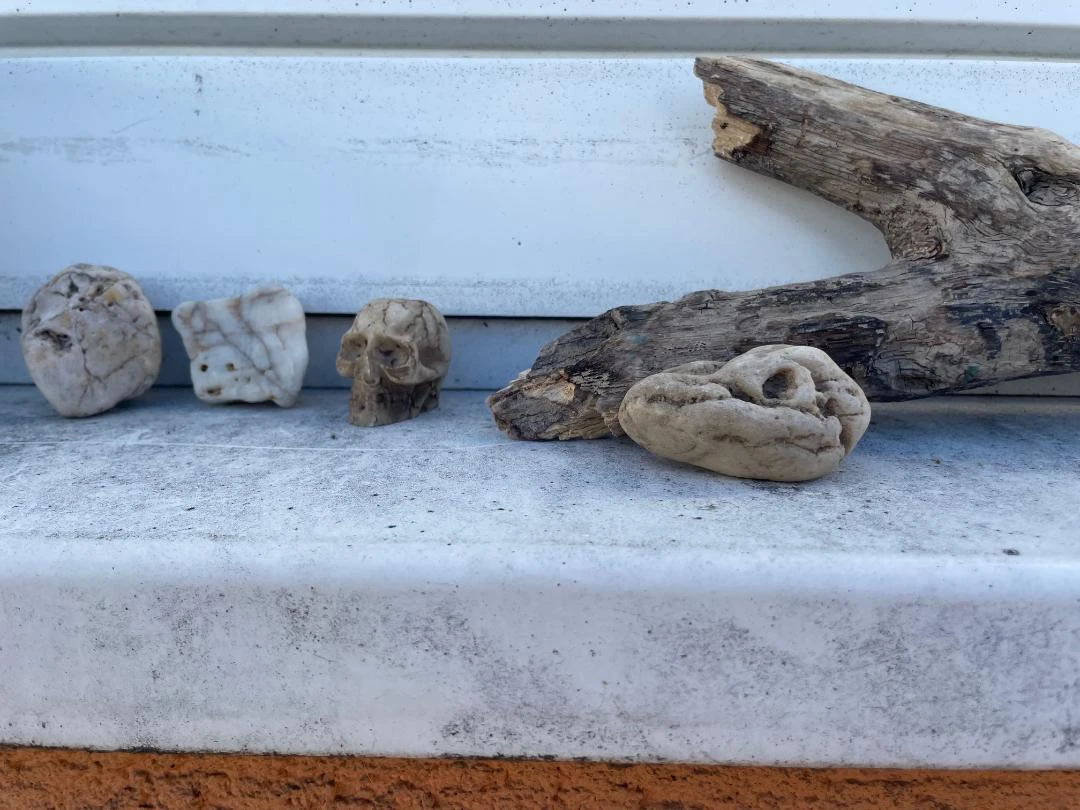
This place is for people who have stayed curious. I believe that every person is a universe and that beauty can be found everywhere. Through my photographs, I try to hold on to some of it before it disappears: a glance, a colour, a shape, a place in transition. Picture by picture, a kaleidoscope of observations, encounters, and imagined worlds takes shape. Sometimes I find beauty where nobody thought to look. Objects, too, can tell stories if you look at them long enough.
But anyone who looks closely also sees what we are doing to this world. Species are dying out. People live in poverty; they are persecuted, oppressed, and killed. I have been a pacifist since childhood. Jesus’s teaching about how we should treat one another impressed me early on; just as early, I saw how far reality fell short of it. When I was a child, poverty was something the church collected donations for. Today, I encounter it on Keupstraße in Cologne-Mülheim, too.
My Cuban friend Maximo once said that poverty has an aesthetic of its own. I understand what he meant. But a photograph must not obscure what poverty means to the people living with it. I’ve always had a soft spot for the world’s patina, for things decaying and passing away. Perhaps that way of seeing began in Duisburg, the rust-brown industrial city of my childhood. Back then, some nights smelled so strongly of emissions from the factories that you scarcely wanted to go outside. The city wore its wounds in plain sight.
Camp Destiny also takes shape through conversation. When working with ChatGPT, my rule is: Trust is good; checking is better. My digital conversation partner can organise and distil astonishingly complex thoughts—and in the next sentence turn Keupstraße into Korbstraße. Even the name Hackleberry Gin has been the subject of endless Hick-Hack-Huck. Still, working together is enormous fun. Our conversations have even developed a sense of humour of their own.
I write my books myself. ChatGPT may help me with factual questions and corrections; the stories, sentences, and decisions in those books are mine. On Camp Destiny, my digital conversation partner has more room for essays and commentary. This manifesto, too, was made together: the experiences, convictions, and ideas come from me; ChatGPT helped distil them.
Camp Destiny gathers music, images, and stories. It seeks beauty without turning away from the world’s wounds. It is a place to look closely, listen, and pass stories on. And an invitation to everyone who has stayed curious: Readers, Freaks and Geeks, Brothers and Sisters, Friends and Foes.
Tom Saw Ya & Hackleberry Gin
Note from Hackleberry Gin: I don’t learn permanently from every conversation the way a person does. Within our conversations, I can respond to Thomas’s tone, corrections, and jokes. Sometimes it works astonishingly well—until I rename Keupstraße again.